

Artificial intelligence is profoundly transforming the world of e-commerce.
Following the launch of Buy with ChatGPT and the Atlas browser by OpenAI - integrating shopping and search functions into the conversational experience - and the introduction of Google AI Search, Agentic Commerce is evolving along two main paths: on one hand, general-purpose agents, born from the evolution of AI models (like ChatGPT or Perplexity); on the other, retailer-led agents, such as Amazon’s Rufus, which bring these logics directly into the shopping experience.
Two different approaches, yet united by the same goal: turning AI into a true shopping agent.
What is Agentic Commerce
Agentic Commerce refers to a new form of online shopping in which intelligent agents complete or automate tasks for users - from product discovery and comparison to purchase decisions.
Unlike traditional bots that react to human input, proactive AI agents can plan, reason, and make autonomous decisions based on users’ needs.
According to McKinsey, this marks a fundamental shift that will reshape the relationship between brands, platforms, and consumers. By 2030, the global value generated by agentic e-commerce could reach 3–5 trillion dollars.
Amazon Rufus: how it works
Rufus is integrated directly into Amazon.it, both in the shopping app and on desktop.To access it, simply click the chat bubble icon located at the bottom right of the mobile app or the top left of the desktop navigation bar.
From there, users can ask natural-language questions such as “What are the best headphones for running?” or “What do I need to organize a barbecue?”
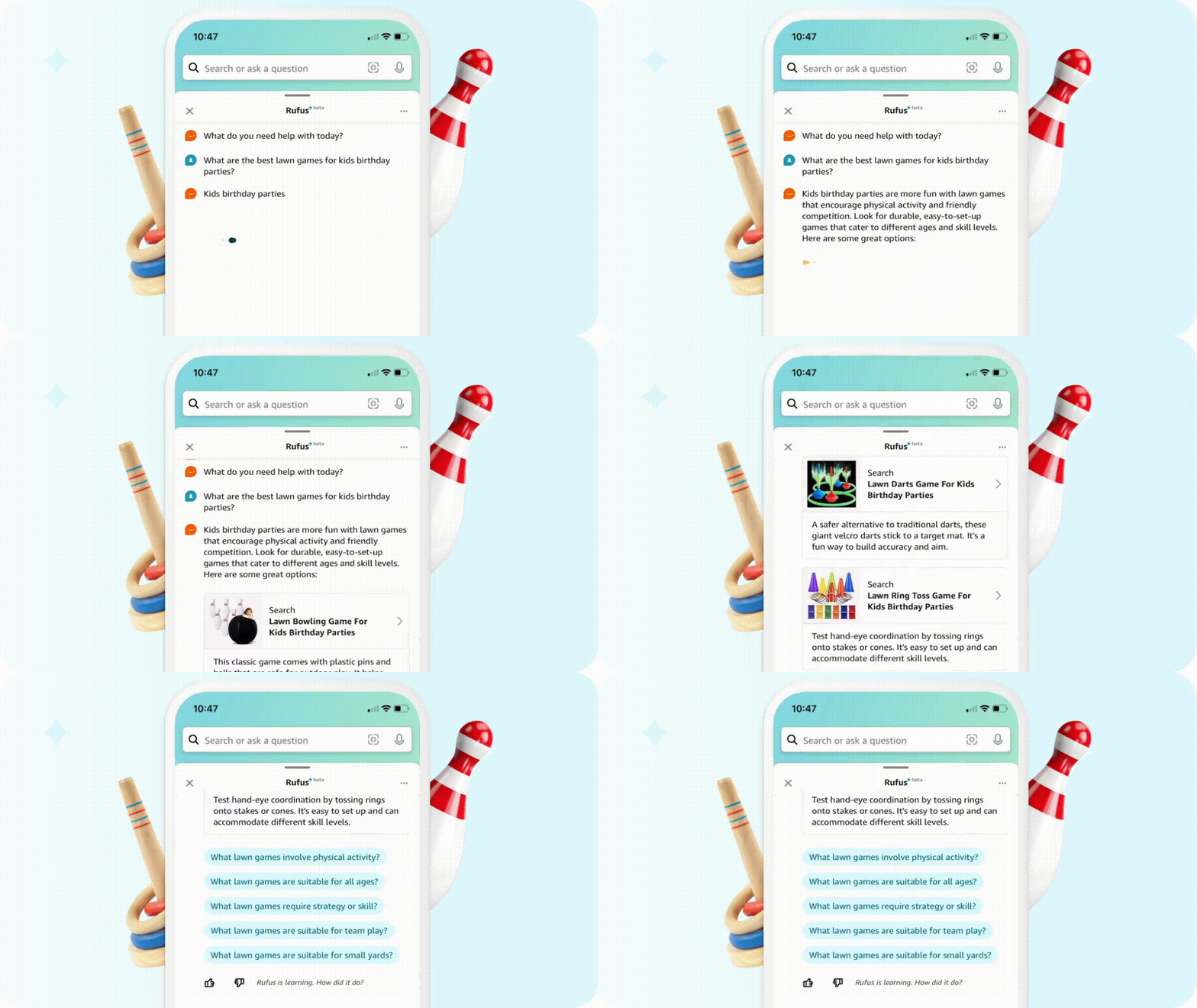
The assistant gathers information from:
- Product pages, with renewed focus on detailed and optional attributes;
- Reviews and AI-generated summaries;
- In some cases, external sources (currently available only in the U.S.).
Using this information, Rufus can suggest products, create shopping lists, compare competitors, and deliver personalized recommendations.
In the United States, Rufus is already more advanced, integrating features such as price tracking, interaction memory, and the recently introduced image-based search.
In Italy, Rufus already allows users to plan events or create complex lists — for instance, “organize a party” or “pack for a trip” — but the system remains less evolved than its U.S. counterpart. Amazon is progressively testing and localizing new features across major European markets, including Italy.
What it means for Brands
For brands, the introduction of Rufus represents a new challenge in visibility and positioning.
Keyword optimization will no longer be enough: brands will need to adapt content to be understood by generative algorithms.
Key areas to consider include:
- Product content: fill out optional attributes and highlight benefits, use cases, and unique features. Every listing should be ready to “answer” Rufus’s questions;
- Reviews: AI-generated summaries make the quality and volume of reviews even more critical, alongside programs like Vine;
- Pricing: with integrated price tracking, close monitoring of competitors and 3P sellers becomes essential;
- Audience and use cases: understand who buys and why, leveraging Amazon DSP and Amazon Marketing Cloud to align advertising strategies;
- Badges and certifications: highlighting awards, lab tests, and recognitions can improve credibility for AI-driven recommendations.
The future of e-commerce is Agentic
The rise of Rufus and other AI agents in retail - such as Walmart’s Sparky or Perplexity’s Comet - marks the beginning of a new era of shopping: more assisted, personalized, and conversational.
For brands, this means rethinking their e-commerce approach to become AI-ready: not just optimizing product pages, but understanding how technology will influence purchasing decisions, customer loyalty, and organic visibility.
Witailer: a front-row observer of AI and e-commerce evolution
In Italy, available information and insights about Rufus are still limited. At Witailer, we believe it’s essential to observe, analyze, and share developments in artificial intelligence applied to Amazon and digital retail in a clear and accessible way.
As one of the first initiatives on this topic, we organized a webinar for brands to explain what Amazon Rufus is and what practical implications it brings for visibility and sales strategies. Our goal is to become a true observatory on the evolution of Agentic Commerce, helping brands navigate change with awareness and strategic vision.
Contact us to learn how to apply these insights to your brand’s strategy and build together the next phase of e-commerce!
CASE HISTORY
Success stories
How we have supported companies and professionals grow and achieve their goals.


